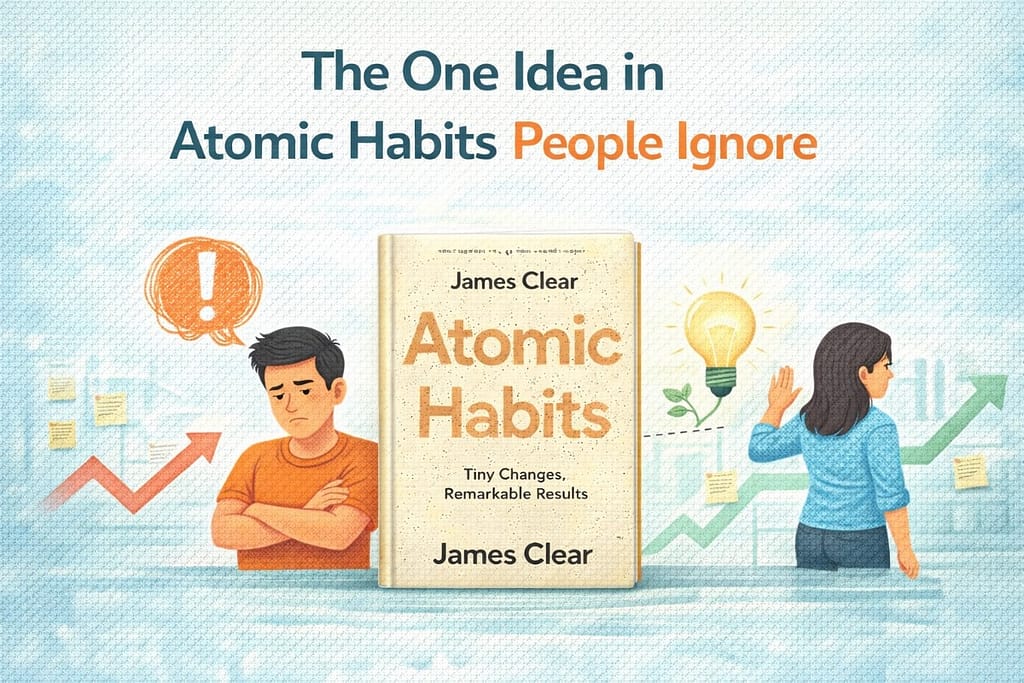
Most readers pick up Atomic Habits to fix their routines. They want better discipline, stronger consistency, and visible results. What confuses many people is that the book does not fail because habits are hard—it fails because readers misunderstand where habits actually come from.
The biggest mistake is treating habits as actions to force rather than outcomes of identity. When this distinction is missed, even well-designed systems feel exhausting. This misunderstanding is why many readers walk away thinking the book “didn’t work.”
One idea in Atomic Habits people ignore: identity comes before habits
The central idea people overlook is identity-based change. Atomic Habits argues that lasting habits are not built by pushing behavior but by reshaping how you see yourself.
When someone tries to act differently without changing identity, every habit feels like resistance. But when behavior aligns with identity, habits become natural. A person who identifies as “someone who exercises” does not rely on motivation to work out. The action flows from identity, not effort.
This is why the book emphasizes becoming over doing. Habits are not goals—they are evidence of who you believe you are.
Why do people misunderstand this idea
Many readers focus on outcomes instead of identity. They chase results like productivity, fitness, or success, assuming habits alone will deliver them. This creates a short-term push followed by burnout.
Identity change is slower and less visible, which makes it easy to ignore. Readers expect immediate results and miss the long-term compounding effect of reinforcing identity through small actions. Without this understanding, Atomic Habits feels repetitive or ineffective.
Who this idea works for—and who it doesn’t
This idea works best for people willing to think long-term and accept gradual change. Readers who are comfortable with small, consistent actions benefit the most.
It struggles with readers looking for quick transformation or emotional motivation. If someone expects habits to fix deeper structural or psychological issues without identity work, the framework feels incomplete.
This distinction is critical when deciding whether the book fits your expectations.
The long-term consequences of missing this idea
When identity is ignored, habits remain fragile. They depend on discipline, motivation, or external pressure. Once those fade, behavior collapses.
When identity leads, habits compound quietly. Actions reinforce identity, identity reinforces action, and consistency becomes easier over time. This difference explains why Atomic Habits transforms some lives while leaving others unchanged.
This connects directly to Why Atomic Habits Fail for Some People, where expectation mismatch is explored in more detail.
Frequently Asked Questions
Is identity really more important than habits in Atomic Habits?
Yes. Habits are the visible result. Identity is the foundation that makes them sustainable.
Why do many people feel Atomic Habits didn’t work for them?
Because they applied techniques without changing how they see themselves.
Is Atomic Habits still worth reading if habits feel hard?
Yes, if you approach it as an identity shift rather than a productivity checklist.
Affiliate Note
Atomic Habits is available on Amazon and Audible if you want to explore the full framework.