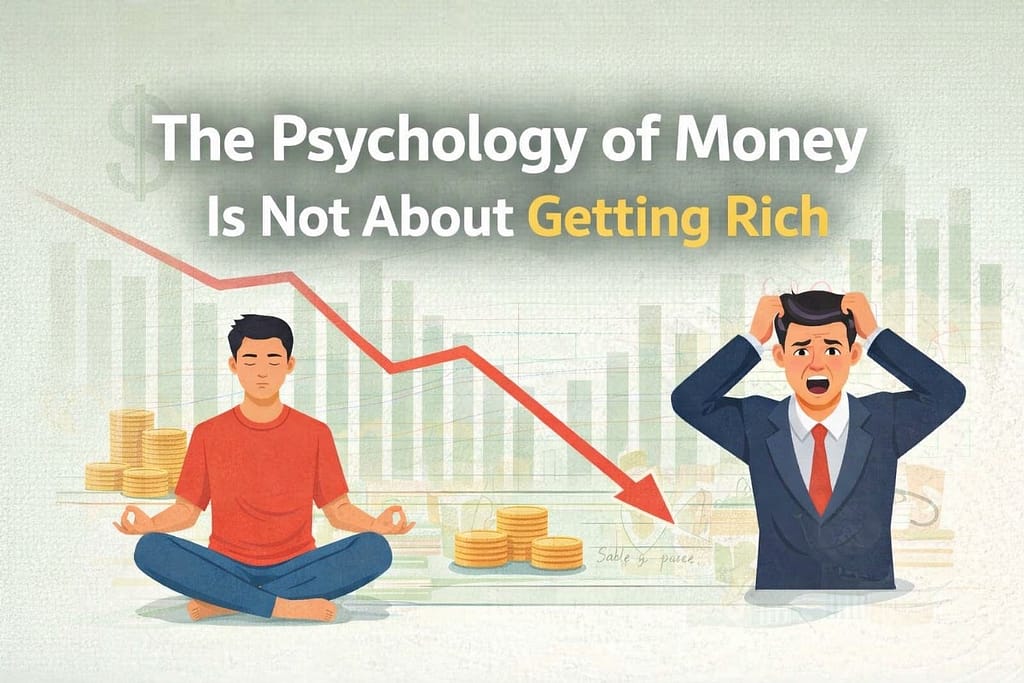
Most people pick up The Psychology of Money expecting tactics for building wealth. That expectation itself is the first misunderstanding. The book isn’t focused on how to get rich—it’s focused on how people actually behave around money.
Financial outcomes are shaped less by intelligence or strategy and more by decisions made under pressure. This is why highly educated, financially literate people still make disastrous money choices. The book shifts attention away from spreadsheets and toward behavior.
Why The Psychology of Money Is Not About Getting Rich
The core idea of The Psychology of Money is that money problems are rarely technical. Most people don’t fail financially because they don’t understand numbers. They fail because emotions interfere with judgment.
Fear, greed, impatience, and overconfidence quietly influence decisions. The book argues that mastering these emotional reactions matters far more than learning advanced investment strategies. Wealth is a byproduct of behavior, not brilliance.
Behavior Matters More Than Intelligence in Money Decisions
Intelligence can help you understand financial concepts, but it doesn’t protect you from panic or impulse. Under stress, even smart people abandon logic. They sell at the worst time, chase trends, or take risks they don’t fully understand.
The Psychology of Money highlights how consistency, patience, and long-term thinking outperform clever tactics. The ability to stay calm when others react emotionally is what separates stable outcomes from financial regret.
Why Smart People Still Make Bad Financial Choices
Knowledge doesn’t eliminate emotion. When markets fall or opportunities look urgent, behavior takes over. People respond to short-term pressure instead of long-term reality.
This is where perspective becomes crucial. Understanding that volatility is normal, uncertainty is unavoidable, and outcomes take time helps prevent costly mistakes. The book doesn’t promise wealth—it teaches restraint.
What This Book Actually Helps You Do
Rather than offering shortcuts, The Psychology of Money helps you:
- Understand your own emotional triggers
- Build patience into financial decisions
- Avoid reacting to noise and pressure
- Protect yourself from mistakes that compound over time
These habits don’t make headlines, but they quietly preserve and grow wealth.
This behavioral lens connects closely to Is Atomic Habits Worth Reading in 2026?, where long-term consistency matters more than intensity in any area of life.
Frequently Asked Questions
Is The Psychology of Money a personal finance book?
Not in the traditional sense. It focuses more on behavior and mindset than tactics or tools.
Does the book teach investing strategies?
No. It explains why behavior matters more than strategies and how emotions shape outcomes.
Who benefits most from reading this book?
Anyone who wants to make calmer, more consistent financial decisions rather than chasing quick wins.
Affiliate Note
The Psychology of Money is available on Amazon and Audible if you want to explore how behavior—not intelligence—shapes financial outcomes over time.