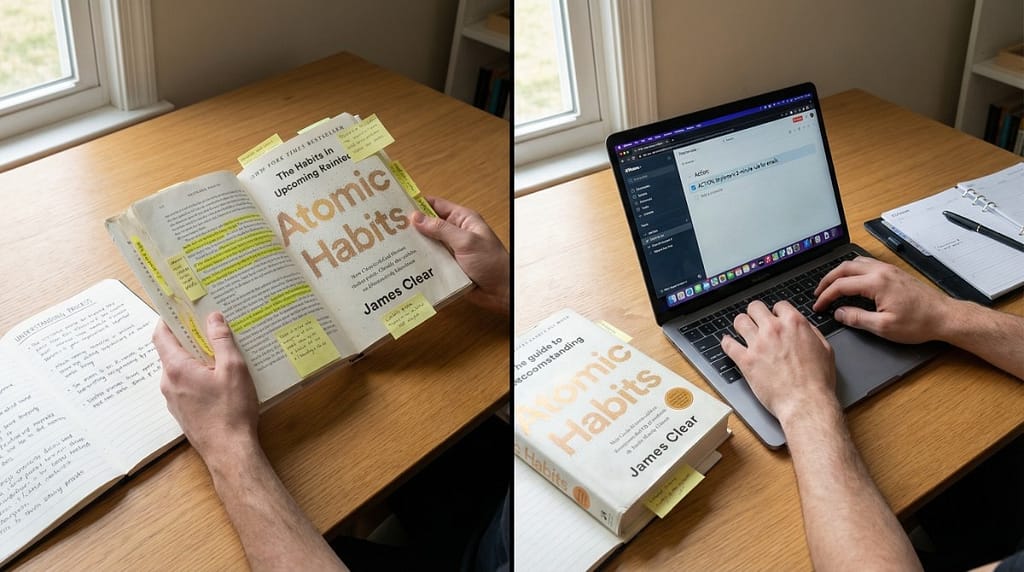
Understanding an idea feels like progress. You read something insightful, it clicks, and the confusion fades. That feeling is rewarding—and that’s exactly why many people stop there. But applying ideas is what creates results, and it feels very different.
Application introduces friction. It forces effort, exposes mistakes, and removes the comfort of certainty. That gap between knowing and doing is where most growth is lost.
Why Understanding Feels Like Progress
Comprehension is clean. When you understand an idea, your brain gets immediate feedback: clarity. Problems feel solved, even if nothing has changed yet.
This creates a powerful illusion. Because the discomfort is gone, it feels like progress has happened. In reality, only the explanation improved—not the outcome.
Understanding is necessary, but it’s not sufficient.
Applying Ideas Is Where Results Appear
Results don’t come from recognizing a good idea. They come from repeating it under imperfect conditions.
Applying ideas means:
- Acting before you feel ready
- Adjusting when things don’t work
- Continuing when results are invisible
This is uncomfortable, which is why many people avoid it. They return to reading, learning, and refining understanding—activities that feel productive without demanding risk.
That’s how growth stalls quietly.
Why Most People Stop at Comprehension
Comprehension offers certainty. Application introduces uncertainty.
When you apply an idea, you face:
- Resistance
- Friction
- Imperfect execution
- Slow feedback
Those experiences challenge identity and confidence. Understanding, on the other hand, protects both.
This is why people often say, “I know this already,” but still don’t act on it.
The same dynamic shows up in Why Reading More Doesn’t Fix Your Life, where consumption replaces execution and progress never compounds.
The Hidden Cost of Not Applying
Every idea you understand but don’t apply carries a cost.
It increases cognitive load. It adds another “should” without changing behavior. Over time, this creates frustration—not because you don’t know enough, but because you aren’t using what you know.
Growth isn’t lost at the level of intelligence. It’s lost at the level of execution.
Turning Ideas Into Action
Bridging the gap doesn’t require more motivation. It requires fewer ideas and clearer action.
A simple shift helps:
- Choose one idea
- Apply it in one place
- Repeat it long enough to see feedback
Depth beats breadth when results are the goal. One idea applied consistently outperforms dozens understood passively.
Why Application Feels Hard—and That’s the Point
Application feels harder than understanding because it changes behavior.
That difficulty isn’t a sign of failure. It’s evidence that you’ve moved past theory. The moment friction appears is the moment growth becomes possible.
Understanding explains the map. Applying ideas is the walk.
Closing the Knowing–Doing Gap
Understanding is where learning begins. Application is where learning pays off.
If your outcomes haven’t changed, the solution isn’t more insight—it’s action under imperfect conditions. That’s where ideas stop being interesting and start being useful.
FAQs
Why does understanding feel satisfying?
Because clarity reduces uncertainty, even if behavior doesn’t change.
Why is applying ideas so difficult?
Because it introduces friction, mistakes, and delayed feedback.
How do I move from understanding to action?
Apply one idea repeatedly before consuming more.
Affiliate Note
Think Again is available on Amazon (USA) and Amazon (India) in multiple formats, including audiobook, Kindle, and print. The audiobook works well because its ideas benefit from reflection and repeated listening rather than constant note-taking.