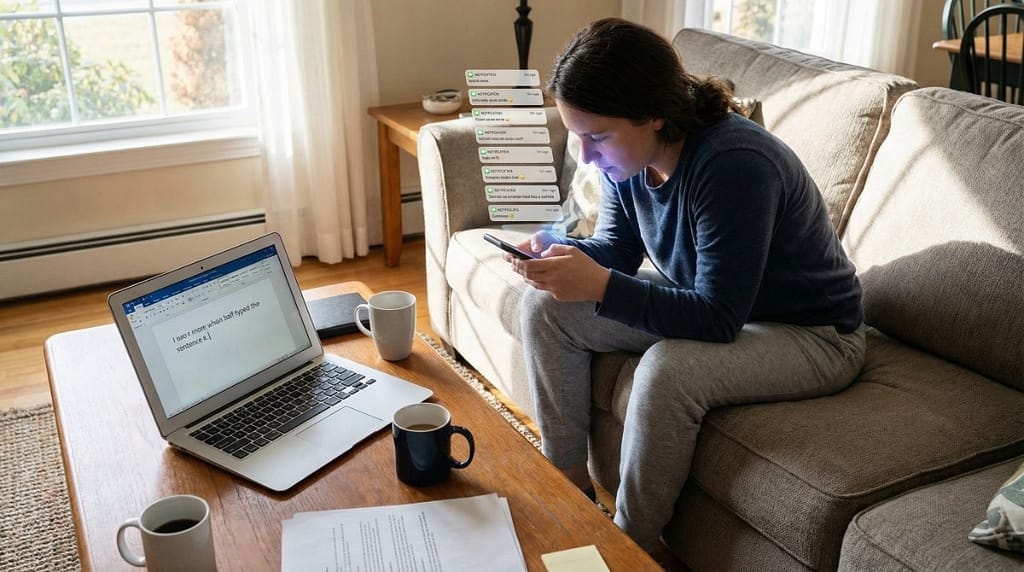
You pick up your phone just to check one thing… and suddenly 20 minutes are gone.
You didn’t even plan to scroll that long. You only wanted to see one notification, one message, or one update. But before you realize it, your attention is gone.
This is why checking your phone becomes automatic.
It doesn’t happen because you are lazy. It happens because your brain learns very quickly what gives small rewards.
Why Checking Your Phone Feels So Hard to Stop
Every notification gives a tiny reward.
A message, a like, a new video, or a new post gives your brain a small burst of dopamine. This reward is quick and easy. You don’t need effort, concentration, or patience.
Over time, the brain starts expecting that reward.
So even when you don’t need to use your phone, your mind pushes you to check it. The action becomes automatic. You open your phone without thinking, just to feel that small moment of stimulation.
This is why checking your phone again and again feels natural, while focusing on work feels heavy.
This pattern is similar to Why Small Distractions Destroy Your Focus, where even tiny interruptions reset your attention and make deep work difficult.
How Dopamine Trains the Brain to Seek Distraction
Your brain is designed to repeat what feels good.
When something gives quick pleasure, the brain remembers it. The next time you feel bored, stressed, or tired, the mind looks for the same easy reward.
Phones provide constant stimulation:
- Notifications
- Short videos
- Messages
- Endless scrolling
Each one gives a small reward, but together they train your brain to prefer distraction over effort.
Real work is different.
Work requires focus, patience, and delayed results. The reward comes later, not instantly. Because of this, the brain often chooses the easier option.
In Atomic Habits, James Clear explains that habits repeat not because you are weak, but because the brain learns what gives quick pleasure and repeats it automatically.
Why You Check Your Phone Without Thinking
After repeating the same behavior many times, the brain stops asking for permission.
You don’t decide to check your phone.
You just do it.
This is how habits work. The action becomes linked to small triggers:
- Feeling bored
- Feeling stuck
- Feeling tired
- Feeling uncomfortable
The moment discomfort appears, your brain looks for relief. The phone becomes the fastest way to get it.
That’s why you can check your phone even when you know you shouldn’t.
The problem is not the phone itself.
The problem is that your brain learned distraction is easier than effort.
How to Break the Habit of Checking Your Phone
You don’t fix this by using more willpower.
You fix it by changing the environment.
Put the phone out of reach when working. Turn off unnecessary notifications. Keep only the apps you really need. Make distraction harder to access.
When the easy reward disappears, the brain slowly adjusts.
At first, focus feels uncomfortable.
Then it becomes normal again.
Your phone is not controlling you.
Your brain is just following the habit it learned.
And any habit can be changed when the reward changes.
FAQs
Q1: Why do I keep checking my phone without thinking?
Because the brain learned to expect small dopamine rewards from notifications and scrolling.
Q2: Is phone addiction about weak discipline?
No. It happens because the brain prefers quick rewards over effort.
Q3: How can I stop checking my phone so often?
Reduce notifications, keep the phone away while working, and make distractions harder to reach.
Affiliate Note
Atomic Habits explains how small rewards train the brain to repeat behaviors automatically. It’s available on Amazon (USA) and Amazon (India) in audiobook, Kindle, and print formats, and it clearly shows why habits form and how they can be changed.