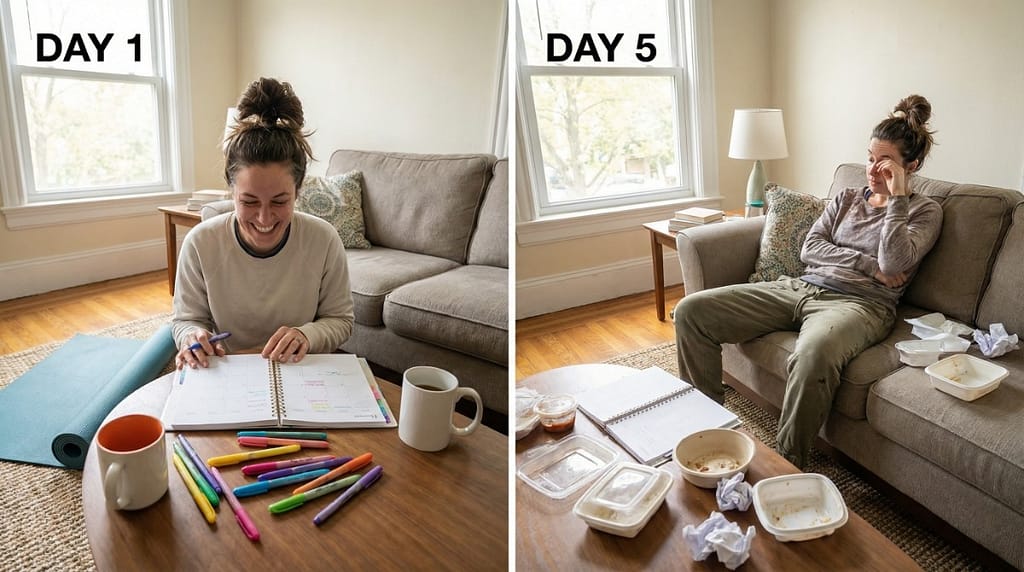
You start strong.
You feel motivated.
You promise yourself this time will be different.
For a few days, everything works. You follow the routine, you feel disciplined, and it seems like you finally figured it out.
Then something changes.
The excitement fades. The energy drops. The same routine that felt easy suddenly feels heavy. After a few days, you stop.
Not because you don’t care.
Not because the goal stopped mattering.
You stop because the feeling disappears.
This is why many people struggle to stay consistent.
Why You Can’t Stay Consistent Even When You Want To
Motivation is emotional.
When you feel inspired, it becomes easy to start. Your brain imagines the result, and that imagination creates energy. You feel ready to change, ready to work, ready to do things differently.
But emotions don’t stay the same.
After a few days, the new routine becomes normal. The brain stops feeling excited about it. Without that emotional push, the same action now feels harder.
Nothing about the habit changed.
Only the feeling changed.
This is why consistency breaks.
Not because you are weak, but because motivation fades.
This pattern is similar to Why Motivation Feels Strong at the Start but Disappears Later, where energy comes from novelty but disappears when repetition begins.
Why Motivation Cannot Create Long-Term Consistency
Motivation is useful for starting, but unreliable for continuing.
If your routine depends on feeling ready, it will only work on good days. On days when you feel tired, stressed, or distracted, the habit disappears.
This is why people restart the same goals again and again.
They wait for motivation, start again, feel strong for a few days, then stop when the emotion fades.
The cycle repeats.
Real consistency cannot depend on emotion.
It has to depend on structure.
In Atomic Habits, James Clear explains that lasting change comes from systems, not motivation. A system makes the action easier to repeat even when you don’t feel like doing it.
When the habit becomes part of your routine, you don’t need excitement to continue.
Why Showing Up Matters More Than Feeling Ready
Most people think consistency means always feeling disciplined.
In reality, consistency means showing up even when you don’t want to.
Some days you feel motivated.
Some days you don’t.
But the habit stays the same.
When the action becomes normal, progress starts to build slowly. It may not feel exciting, but it works.
People who stay consistent are not always more motivated.
They just keep going when the feeling disappears.
Consistency is not about perfect days.
It is about repeating the same action on imperfect days.
When you stop relying on motivation and start relying on routine, staying consistent becomes much easier.
FAQs
Q1: Why can’t I stay consistent with habits?
Because motivation fades, and habits built only on emotion break easily.
Q2: How can I stay consistent without motivation?
Use small routines and systems that you can follow even on low-energy days.
Q3: Is consistency about discipline or routine?
Mostly routine. Discipline helps at the start, but routine keeps the habit going.
Affiliate Note
Atomic Habits explains why consistency comes from systems, not motivation. It’s available on Amazon (USA) and Amazon (India) in audiobook, Kindle, and print formats, and it clearly shows how small routines create long-term change.