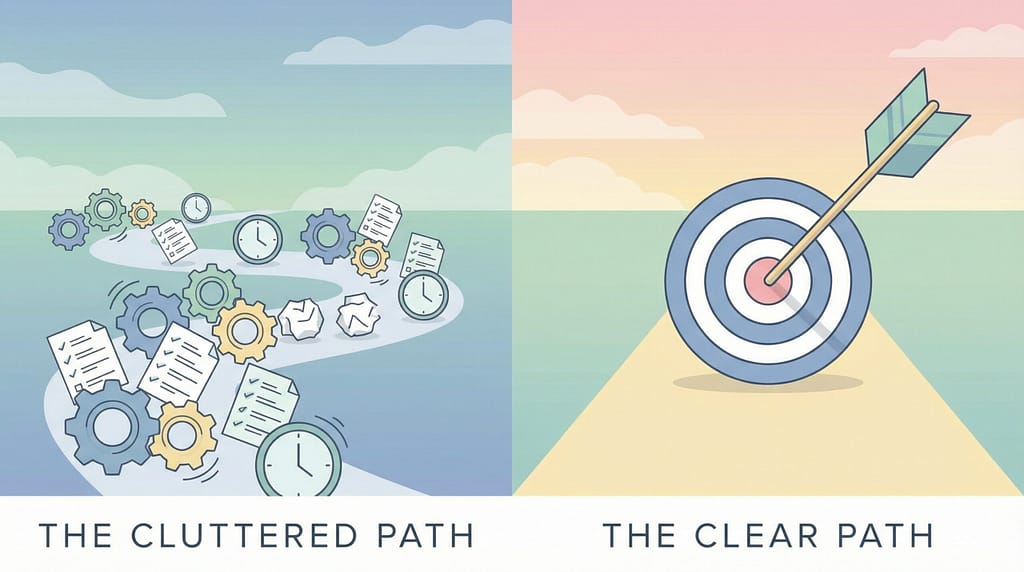
Being busy feels productive. Full calendars, long task lists, and constant activity create the impression that progress is happening. Yet many people reach the end of the day exhausted, only to realize that nothing meaningful has actually moved forward. This gap explains the real difference between busy vs effective.
Busyness measures motion. Effectiveness measures outcomes.
The two are often confused, but they lead to very different results.
Why Busy Feels Like Progress
Busyness is visible. You can see tasks getting done. You can respond quickly. You can stay occupied from morning to night.
That visibility creates reassurance. It feels safer to stay busy than to slow down and think. Activity becomes a shield against uncertainty.
But being busy doesn’t ask hard questions. It doesn’t force prioritization. It simply fills time.
That’s why many people are busy every day and still feel stuck year after year.
Busy vs Effective: Where the Real Difference Lies
Effectiveness depends on outcomes, not effort.
An effective day may look quiet from the outside. Fewer tasks. More focus. Longer stretches of uninterrupted work. The difference is that those actions move a meaningful goal forward.
When priorities are unclear, effort spreads thin. Energy is divided across too many tasks, none of which receive enough attention to create impact.
This is why effectiveness requires clarity before action.
Without clarity, productivity simply amplifies noise.
Activity Without Direction Creates Low Impact
When everything feels important, nothing truly is.
Many people operate in reaction mode. Emails dictate priorities. Notifications shape attention. Urgent requests replace important work.
In this state, efficiency becomes dangerous. You get faster at completing tasks that don’t matter.
This is the same trap discussed in The Problem With Chasing Productivity, where motion increases but impact stays low because effort lacks direction.
Fewer Actions, Higher Impact
Effectiveness improves when you deliberately choose fewer actions.
This requires discomfort. Saying no. Letting some tasks go unfinished. Accepting that not everything deserves attention.
But focus creates leverage.
When effort is concentrated on high-impact work, results compound. Progress becomes visible not through busyness, but through outcomes.
Effective people don’t try to do everything. They protect what matters most.
Measuring the Right Thing
Busyness is easy to measure. You can count hours worked or tasks completed.
Effectiveness is harder. It asks better questions:
- Did this move my most important goal forward?
- Did this create lasting value?
- Would skipping this task have changed anything?
When you start measuring outcomes instead of activity, priorities sharpen naturally.
Choosing Effectiveness Over Motion
The difference between busy and effective isn’t about working harder. It’s about working deliberately.
Busyness fills time. Effectiveness creates results.
If your days feel full but progress feels slow, the issue isn’t effort. It’s focus.
Choosing effectiveness means fewer actions, clearer priorities, and higher impact—even if it looks less impressive on the surface.
FAQs
Why do people confuse being busy with being effective?
Because busyness feels productive and provides visible activity, even when outcomes don’t improve.
Can someone be busy and effective at the same time?
Occasionally, but sustained effectiveness requires intentional focus, not constant motion.
How can I become more effective?
By identifying high-impact work, eliminating low-value tasks, and measuring outcomes instead of effort.