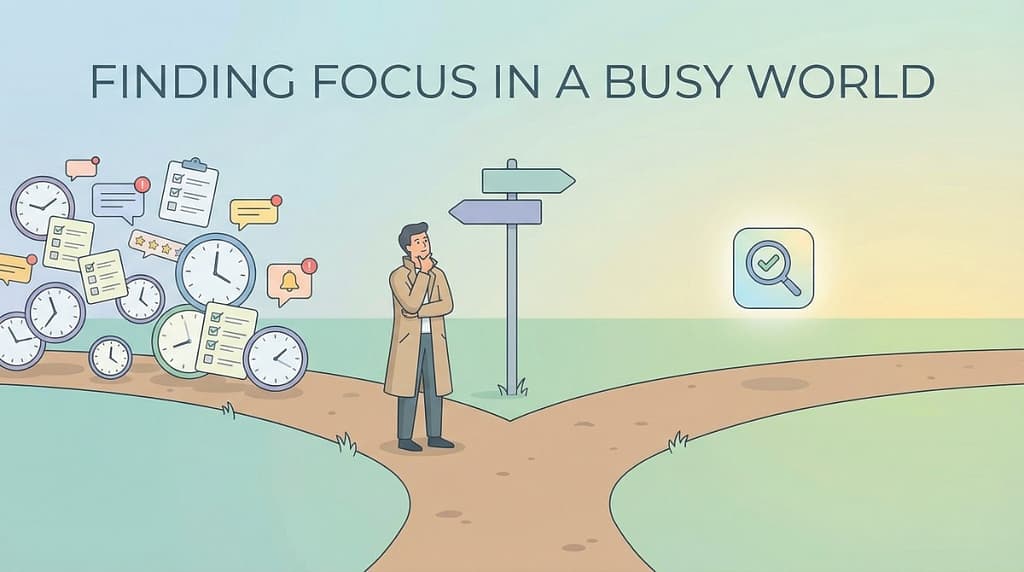
Productivity is often treated as the ultimate goal. More tasks were completed. More tools used. More hours optimized. But despite all this effort, many people feel more stressed and less effective than ever. That’s because chasing productivity frequently creates motion without meaning.
Busy schedules feel productive. Full calendars give the impression of progress. Yet, when the day ends, very little that truly matters has moved forward. Activity increases, but impact stays flat.
The problem isn’t effort. It’s direction.
Busy Feels Productive—But Isn’t
Busyness is visible. You can measure it. You can show it. That’s why it’s so appealing.
Emails answered, meetings attended, tasks checked off—all of it signals momentum. But most busywork exists because it’s easy to respond to, not because it’s important. When everything is treated as urgent, nothing is treated as meaningful.
This is how people become efficient at the wrong things.
Being busy keeps you occupied. It doesn’t guarantee progress.
Why Chasing Productivity Reduces Impact
Productivity tools promise efficiency. Systems promise optimization. But efficiency without clarity is dangerous.
When priorities are unclear, productivity doesn’t resolve the problem—it magnifies it. You simply do more of what shouldn’t be done in the first place.
This is why people who obsess over productivity often feel burned out. They are constantly moving, but rarely advancing. Output increases, but outcomes don’t.
Real productivity is selective. It requires deciding what not to work on.
This is why many people stay busy without making progress, a pattern also explored in Why Deep Work Is Harder Than It Sounds, where focus—not efficiency—is the real constraint.
Tools Don’t Replace Thinking
Productivity apps, planners, and frameworks are useful—but only after priorities are clear.
No tool can decide what is relevant for you. No system can replace judgment. When tools are used to avoid hard decisions, they become distractions rather than solutions.
The most effective people don’t manage time better. They choose less.
They eliminate low-impact work. Not only that, but they protect attention. They say no early, so they don’t have to correct mistakes later.
Focus Is the Missing Ingredient
Focus is uncomfortable. It forces trade-offs. It creates imbalance in the short term.
But without focus, productivity becomes noise.
When effort is applied without direction, work expands endlessly. Everything feels urgent. Nothing feels finished. The result is exhaustion without satisfaction.
Impact comes from concentrating effort on some meaningful tasks and letting the rest go.
Redefining What Productivity Means
True productivity isn’t about doing more. It’s about doing what matters.
It’s choosing impact over appearance. Progress over activity. Results over motion.
If your productivity system doesn’t help you ignore the unimportant, it’s not helping you at all.
Chasing productivity keeps you busy. Choosing priorities makes you effective.
FAQs
Why does productivity increase stress instead of results?
Because effort is applied without clear priorities, increasing workload without increasing impact.
Are productivity tools useless?
No, but tools only work after you decide what truly matters.
What is real productivity?
Focusing on high-impact work and intentionally ignoring the rest.