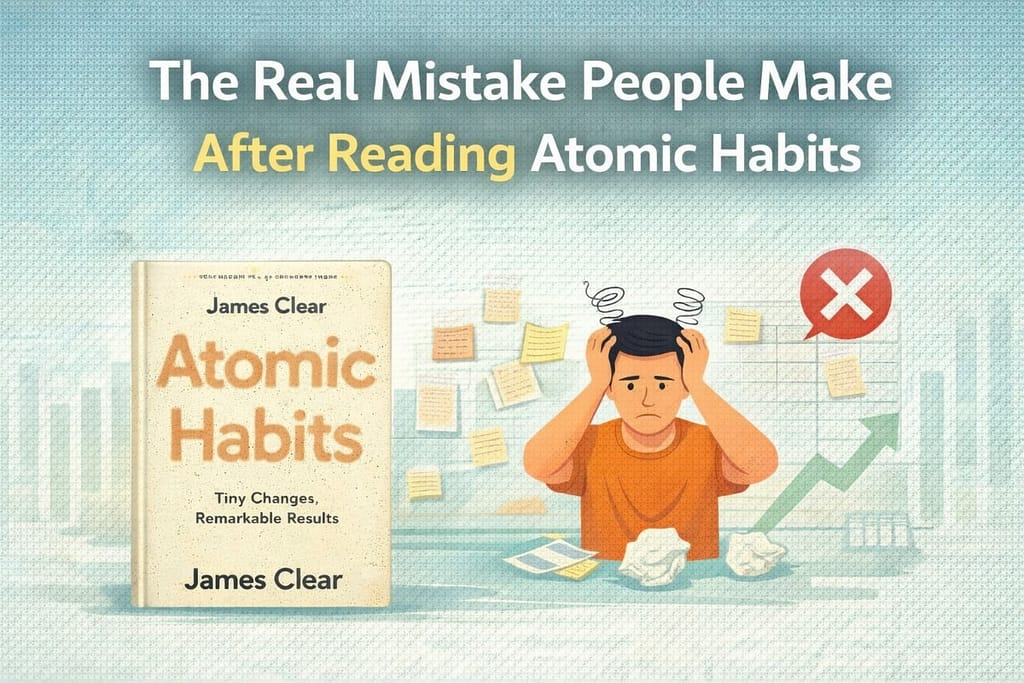
Many people finish reading Atomic Habits feeling motivated and ready to change their lives. That motivation feels productive—but for most readers, it quietly becomes the reason they fail.
The problem isn’t the book.
The problem is what people do immediately after finishing it.
This article explains the most common mistake readers make after Atomic Habits—and why avoiding it matters more than learning any single technique from the book.
The Real Mistake After Reading Atomic Habits: Trying to Change Everything at Once
Atomic Habits teaches the power of small, incremental improvement. Yet many readers walk away attempting to overhaul their entire routine at the same time:
- New morning routines
- Strict workout schedules
- Radical diet changes
- Deep work blocks
- Reading goals
- Productivity systems
All at once.
This creates pressure, not progress.
Why This Approach Backfires
When you attempt too many habit changes simultaneously, three things happen:
- Cognitive overload
Your brain must remember, track, and evaluate too many behaviors at once. - Emotional pressure
Missing one habit feels like failing the entire system. - Early burnout
Progress becomes exhausting instead of automatic.
The irony is that this approach contradicts the core logic of Atomic Habits.
Atomic Habits Was Never About Transformation Sprints
Many readers unconsciously turn Atomic Habits into a challenge mindset:
- “30 days to a new me”
- “This month I’ll fix everything.”
- “I’ll go all in.”
But Atomic Habits is not about speed or intensity.
It is about alignment—making behaviors fit naturally into your existing life.
When habits feel boring, gradual, and almost insignificant, they’re actually working.
The Role of Boredom (And Why It Matters)
One reason people abandon habits is boredom. Progress feels invisible. There’s no dramatic feedback loop.
Atomic Habits assumes this boredom will happen.
That’s why it emphasizes:
- Repetition over excitement
- Systems over goals
- Identity over outcomes
When you try to make a habit change exciting, you often make it fragile.
Quiet Progress Is the Point
The book works best when:
- Changes are small enough to ignore
- Results compound slowly
- You stop checking for visible progress
The real value of Atomic Habits isn’t motivation—it’s sustainability.
Most people fail not because they don’t know what to do, but because they demand visible change too quickly.
What to Do Instead (The Correct Application)
Instead of asking:
“What all can I change now?”
Ask:
“What is the one habit that would be easiest to repeat even on a bad day?”
Then:
- Change only that
- Ignore the rest
- Let consistency prove itself
This is how Atomic Habits actually works in real life.
Final Verdict: The Book Isn’t the Problem
Atomic Habits doesn’t fail readers. Atomic Habits works even when you’re lazy
Readers fail by turning a long-term system into a short-term transformation plan.
When applied patiently, the book delivers exactly what it promises—not dramatic change, but durable change.
Should You Read Atomic Habits? Is Atomic Habits worth reading
Buy it if:
- You struggle with consistency
- You often quit after strong starts
- You want systems that survive low motivation
Skip it if:
- You want quick results
- You prefer intensity over sustainability
- You already use structured habit systems
Where to Get Atomic Habits
Frequently Asked Questions
Why do people fail after reading Atomic Habits?
Because they try to change too much at once instead of letting habits compound slowly.
Is Atomic Habits about small habits only?
No. It’s about sustainable systems, not the size of the habit.
Does this book work without motivation?
Yes. That’s one of its core strengths.
Is the Audible version worth it?
Yes. The ideas are simple and benefit from repetition.