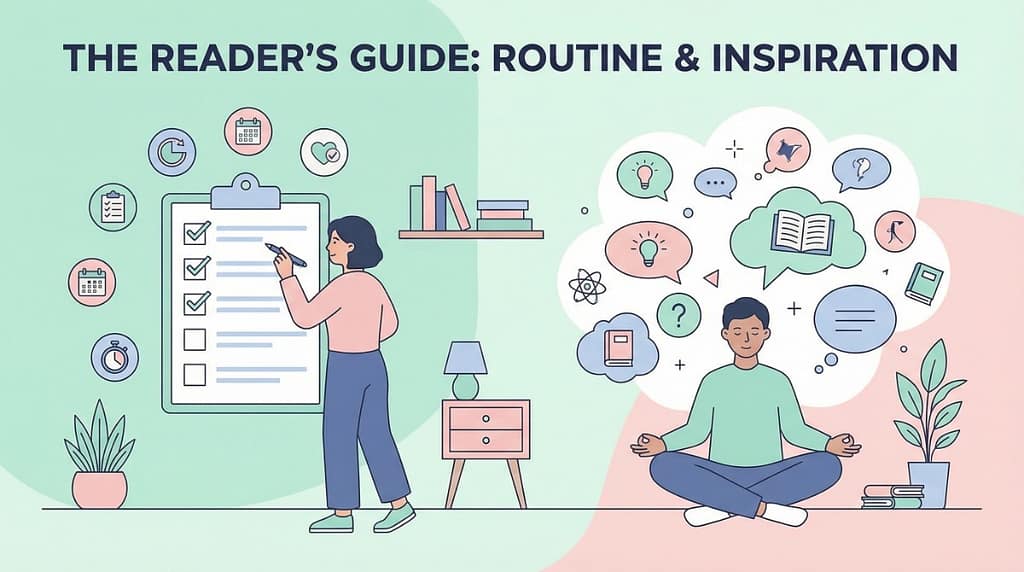
Self-help books don’t work for everyone—and that’s not a flaw. It’s a misunderstanding.
Many readers assume that if a book is popular, insightful, or highly recommended, it should work for anyone. When it doesn’t, they blame the book or themselves. But self-help books are selective by nature. They reward certain behaviors and fail others.
Understanding who self-help books work for is the difference between progress and disappointment.
Why Self-Help Feels Inconsistent
Self-help advice often sounds universally applicable. The language is broad. The examples feel relatable. But implementation is not universal.
Books don’t act on people. People act on books.
If someone expects insight alone to produce change, results fade quickly. Inspiration feels powerful at first, but without restructuring routines, behavior returns to baseline.
This is why some readers swear by a book while others feel unchanged after finishing the same pages.
Who Self-Help Books Work For
Self-help books work best for people who are already willing to change constraints, not just mindset.
They tend to help readers who:
- Are ready to adjust routines
- Are willing to remove friction
- Expect effort after insight
- Apply ideas repeatedly, not perfectly
For these readers, a book becomes a guide for action. Ideas translate into systems. Progress compounds.
Self-help doesn’t create readiness. It amplifies it.
Who Self-Help Books Don’t Work For
Self-help books struggle with readers who:
- Expect motivation to last
- Prefer collecting ideas over applying them
- Avoid changing environments or routines
- Read for reassurance instead of execution
For them, books feel useful while reading and ineffective afterward. The problem isn’t intelligence or discipline—it’s expectation.
This mismatch explains why many people keep searching for the next book instead of applying the last one.
This pattern closely connects with Why Good Advice Fails Without the Right Environment, where ideas collapse because context never changes.
Action-Takers vs Idea Collectors
The biggest divider isn’t knowledge. It’s action.
Action-takers use books to simplify decisions and reduce effort. Idea collectors use books to feel prepared.
The difference shows up quickly:
- One group changes routines
- The other changes reading lists
Books reward execution. They punish passivity.
Choosing the Right Book for You
Not every book is right for every moment.
Before reading, ask:
- Am I willing to change how I act?
- What routine will this affect?
- What will I remove if I apply this?
If the answer is “nothing,” the book may still be good—but it won’t work yet.
Timing matters more than content.
Reading With the Right Lens
Self-help books are tools, not solutions.
They work when paired with action, structure, and willingness to redesign behavior. They fail when treated as motivation sources or idea collections.
Knowing who a book is for prevents wasted time, false hope, and endless consumption.
The goal isn’t to read more self-help. It’s to read when you’re ready to act.
FAQs
Why do self-help books work for some people and not others?
Because they reward action and routine changes, not passive understanding.
Does this mean self-help books are overrated?
No. They are powerful when used by readers ready to apply ideas.
How can I tell if a self-help book will work for me?
If you’re willing to change behavior—not just mindset—it likely will.
Affiliate Note
Atomic Habits is available on Amazon (USA) and Amazon (India) in multiple formats, including audiobook, Kindle, and print. The audiobook works particularly well because the ideas focus on systems and habit design, benefiting from repeated listening rather than active note-taking.