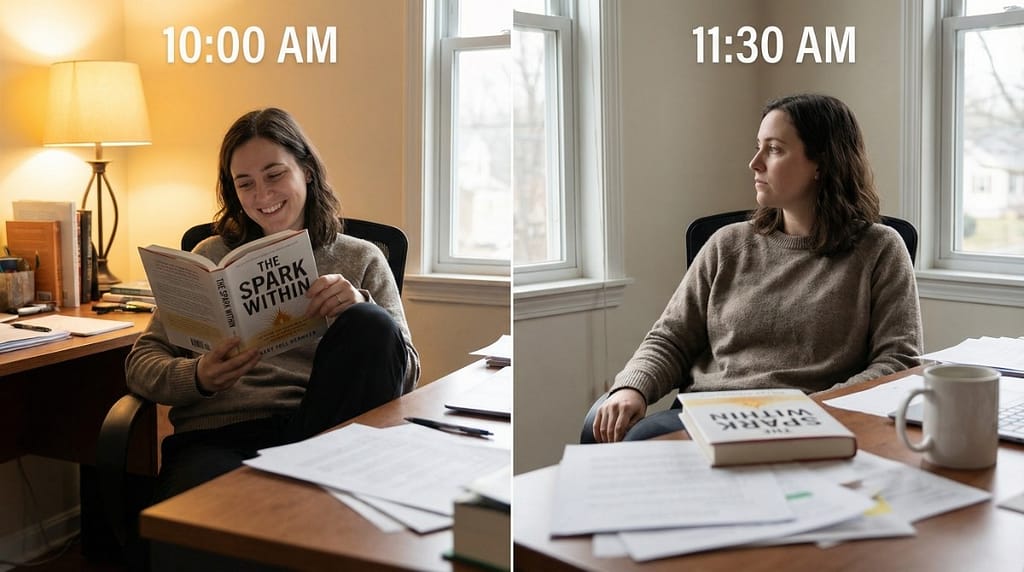
Inspiration feels powerful because it creates momentum without resistance. When you’re inspired, action feels easy. Energy is high. Doubt is low. For a brief moment, change feels inevitable.
But inspiration fades quickly—not because you did something wrong, but because inspiration isn’t designed to last.
Inspiration creates movement, not structure. And without structure, behavior collapses the moment conditions change.
Why Inspiration Feels So Effective at First
Inspiration works on emotion. It temporarily removes friction by making effort feel lighter. That emotional lift creates urgency and optimism.
The problem is that emotion is unstable.
As soon as:
- Energy drops
- Life interrupts
- Stress appears
the emotional fuel disappears. When that happens, behavior has nothing to stand on.
This is why inspiration fades even when the idea is good.
Why Inspiration Fades Without Structure
Inspiration doesn’t redesign your environment. It doesn’t reduce decisions. It doesn’t remove friction.
It assumes that feeling good will carry action forward.
But real life doesn’t preserve feelings. It introduces constraints.
When progress depends on motivation, it collapses under pressure. When progress depends on structure, it survives bad days.
This is the key difference between momentum and sustainability.
Temporary Boost vs Lasting Progress
Inspiration creates a spike. Systems create continuity.
A spike looks impressive but disappears. Continuity looks boring but compounds.
Many people mistake the absence of inspiration for failure. In reality, inspiration has simply done its short-term job. What matters is what remains afterward.
This pattern also explains Why Motivation Dies After Week One, where emotional drive fades because nothing structural replaced it.
What Actually Carries Behavior Forward
Lasting progress depends on what remains when inspiration is gone.
That usually means:
- Fewer decisions
- Clear defaults
- Simple routines
- Low restart cost
When behavior is easy to repeat without thinking, it no longer needs emotional support.
The goal isn’t to stay inspired. The goal is to become indifferent.
Why Inspiration Is Overvalued
Inspiration is visible. Structure is invisible.
Social media, books, and talks highlight emotional moments because they’re engaging. But those moments don’t reflect how progress actually happens.
Progress happens quietly, through repetition and constraint.
Inspiration may start movement, but it cannot maintain it.
Using Inspiration Correctly
Inspiration isn’t useless. It just has a narrow role.
Its best use is to:
- Start something
- Create initial movement
- Draw attention to a change
But inspiration must be followed immediately by structure. Otherwise, it becomes a temporary high with no follow-through.
If nothing changes after the feeling fades, the inspiration was wasted.
What Remains After Motivation Fades
The real test isn’t how inspired you feel today.
It’s what you still do tomorrow, when:
- You’re tired
- You’re busy
- You don’t feel like it
If behavior survives that moment, progress continues. If not, inspiration did all the work—and then disappeared.
Lasting change depends on what remains after motivation fades.
FAQs
Why does inspiration fade so quickly?
Because it relies on emotion, which changes with energy and circumstances.
Is inspiration useless for change?
No, but it must be followed by structure to last.
What replaces inspiration for long-term progress?
Systems that reduce friction and make action repeatable.
Affiliate Note
Drive is available on Amazon (USA) and Amazon (India) in multiple formats, including audiobook, Kindle, and print. It fits here because it explains why motivation alone is unreliable and why autonomy and structure matter more for sustained behavior.