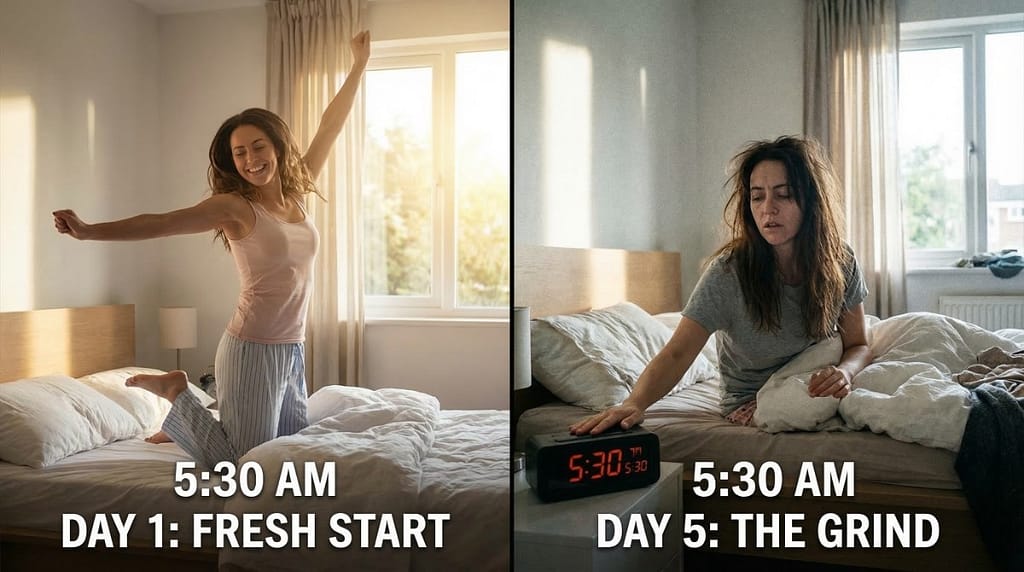
At the beginning, motivation feels powerful.
You wake up early, follow the routine, and feel like this time everything will change. The plan looks clear. The energy feels real. For a few days, everything seems to work exactly the way you imagined.
Then something shifts.
The excitement fades. The same routine feels heavier. The task that felt easy suddenly feels difficult. You start skipping days. The system slows down, and eventually stops.
This is the moment when people think they lack discipline.
In reality, it’s just the moment when motivation fades.
Why Motivation Fades After the First Few Days
Motivation is emotional energy.
It rises quickly when something is new, exciting, or meaningful. Starting a new habit creates hope, and hope produces energy. That’s why the first few days often feel easy.
But emotions are temporary.
As the routine becomes familiar, the brain stops treating it as something new. The excitement disappears, even though the goal hasn’t changed. Without the emotional boost, the same action now feels like effort.
This is normal.
The brain is designed to respond strongly to novelty, not repetition. Once novelty fades, motivation fades with it.
This pattern connects closely with Why Starting Feels Easy but Continuing Feels Impossible, where excitement carries the beginning but cannot sustain the habit.
Why Motivation Alone Cannot Build Consistency
If progress depends on feeling motivated, progress will always be unstable.
Some days you feel energetic. Some days you don’t. If your routine only works when you feel good, it will collapse the moment life becomes stressful, busy, or tiring.
That’s why people often restart the same goals again and again. Each time motivation returns, the cycle begins. Each time motivation fades, the system breaks.
The problem isn’t lack of effort.
The problem is building habits on emotion instead of structure.
Motivation is useful for starting, but it’s unreliable for continuing.
Systems Work When Motivation Doesn’t
Real progress comes from systems, not feelings.
A system reduces the need to decide every day. It makes the action automatic or easier to repeat. When the behavior becomes part of a routine, it no longer depends on emotional energy.
For example:
- Doing the same task at the same time every day
- Keeping the environment ready for the habit
- Making the action small enough to repeat on low-energy days
These changes allow progress to continue even when motivation fades.
The goal is not to stay motivated forever.
The goal is to keep moving when motivation is gone.
Motivation feels strong at the start because emotions are high.
Progress lasts when the system survives after those emotions disappear.
FAQs
Q1: Why does motivation disappear so quickly?
Because motivation is based on emotion, and emotions naturally rise and fall.
Q2: How can I stay consistent without motivation?
Use routines and systems that make the action easier to repeat even on low-energy days.
Q3: Is motivation useless?
No. It’s helpful for starting, but long-term progress depends on structure, not feelings.
Affiliate Note:
Atomic Habits explains why systems create consistency even when motivation fades. It’s available on Amazon (USA) and Amazon (India) in audiobook, Kindle, and print formats — showing how small routines keep working after excitement disappears.