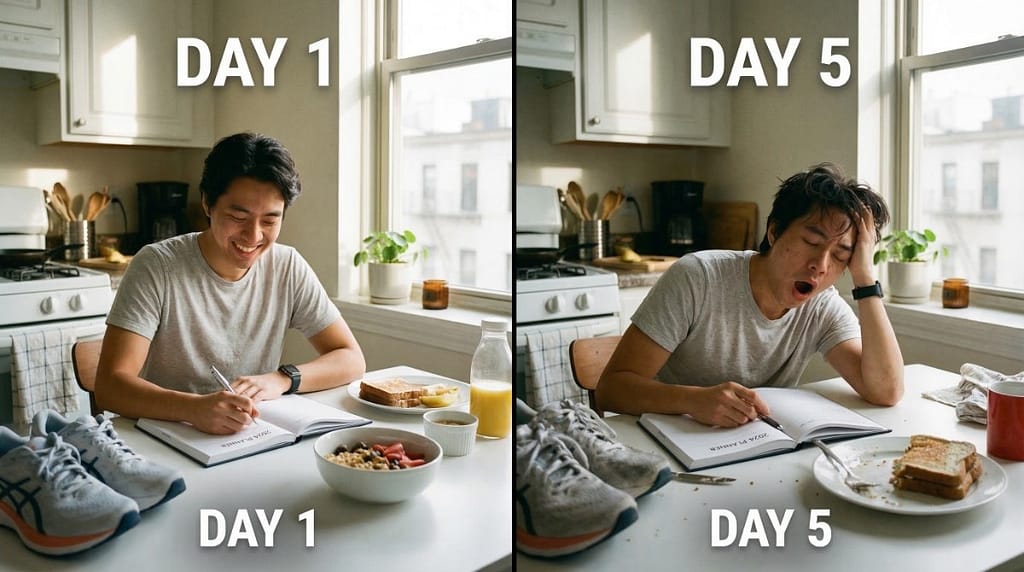
Starting something new always feels exciting.
A new habit. A new routine. A new goal. For the first few days, motivation feels strong and everything looks possible. You imagine the results, the progress, the improved version of yourself that will come from sticking with the plan.
At the beginning, energy is high because the change is new. The idea of improvement creates excitement, and that excitement makes the first step feel surprisingly easy.
But then something strange happens.
A few days later, the enthusiasm fades. The same task that felt motivating suddenly feels heavier. Continuing the routine requires effort. Skipping it becomes tempting.
This is the hidden tension between starting vs continuing.
Why Starting vs Continuing Feels Completely Different
Your brain responds strongly to novelty.
When you start something new, the experience feels fresh and stimulating. The brain releases dopamine because the change represents possibility and discovery. This makes the beginning of any new habit feel energizing.
But novelty doesn’t last.
Once the same action repeats day after day, the brain stops receiving the same stimulation. The routine becomes familiar. The excitement disappears, even though the activity itself hasn’t changed.
At that point, the emotional reward fades and effort becomes more noticeable.
That’s why the first few days of a new habit often feel easier than the days that follow. The excitement of starting carries you forward temporarily. When that excitement fades, the real test begins.
This pattern is closely related to Why You Keep Quitting After 3 Days, where early motivation creates intensity but fails to survive the repetition phase.
This is also why so many habits collapse early. Most people don’t struggle with beginning — they struggle with maintaining.
The Repetition Phase Where Most Habits Fail
Continuing something requires a completely different mindset than starting it.
Starting depends on motivation. Continuing depends on tolerance for repetition.
Once the novelty fades, the brain begins interpreting the routine as ordinary work instead of an exciting improvement. The same activity that once felt meaningful now feels boring.
But boredom is not a sign that something is wrong.
It’s simply a sign that the novelty phase has ended.
Many people interpret this stage incorrectly. When motivation fades, they assume the habit isn’t working or that they lack discipline. In reality, they’ve simply entered the phase where progress actually begins.
Real habits form through repetition, not excitement.
Why Motivation Alone Cannot Sustain Habits
Motivation is temporary by nature. It rises when something is new and drops once the experience becomes familiar.
If a habit depends entirely on motivation, it will eventually collapse.
That’s why sustainable habits are built around structure instead of emotion. The goal is to make repetition easier than quitting.
For example:
- Reduce the size of the habit so it’s easier to repeat.
- Attach the habit to an existing routine.
- Remove friction that makes the task difficult to start.
These adjustments reduce reliance on motivation and make consistency more realistic.
When habits become simple enough, they survive the days when energy is low.
Learning to Continue Without Excitement
The real breakthrough happens when you stop expecting habits to feel exciting.
Instead of chasing the motivation that exists during the starting phase, focus on making the continuation phase manageable.
Ask a different question:
“What version of this habit can I repeat even when I don’t feel like doing it?”
When the habit becomes small enough to repeat consistently, progress begins to accumulate.
Starting feels exciting because it’s new.
Continuing feels difficult because it’s repetitive.
But repetition is where real change happens. Habits that survive the boring phase eventually become automatic — and once something becomes automatic, it no longer requires constant effort.
The challenge isn’t starting.
The challenge is continuing long enough for the behavior to become normal.
FAQs
Q1: Why do new habits feel exciting at the beginning?
Because novelty triggers dopamine, making the start of a habit feel motivating and stimulating.
Q2: Why do habits become harder after a few days?
Because the novelty fades and the brain stops receiving the same emotional reward.
Q3: How can I make habits easier to continue?
Reduce the size of the habit, remove friction, and focus on repetition rather than motivation.
Affiliate Note:
Atomic Habits explains why lasting habits depend on systems and repetition rather than motivation. It’s available on Amazon (USA) and Amazon (India) in audiobook, Kindle, and print formats — reinforcing how small consistent actions create long-term results.